
In Focus
Mac mini’s Unified Memory Architecture offers shared memory ideal for local AI models
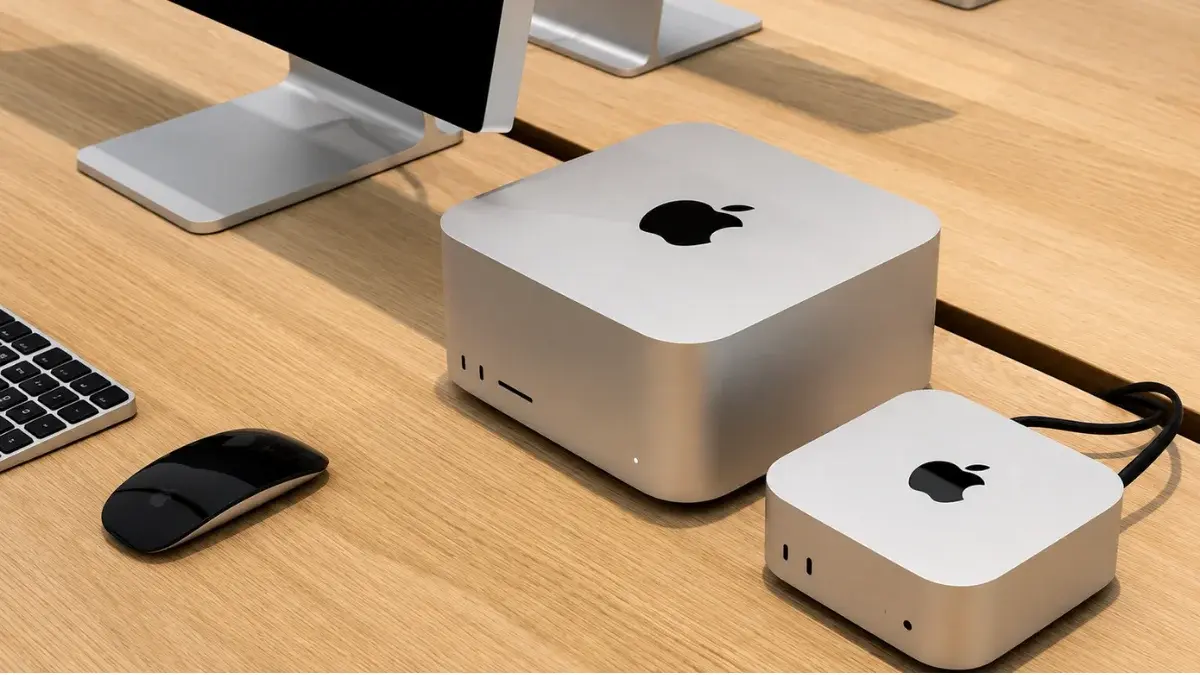
OpenAI has reportedly purchased tens of thousands of Mac minis and Mac studios
Anthropic has also reportedly rented Mac minis through Amazon Web Services
OpenAI is reportedly contributing to rising demand for Apple Mac mini shortage. The AI firm has purchased tens of thousands of Mac minis and Mac Studios for use in for specialised AI agents training, especially reinforcement learning. Anthropic has reportedly rented Mac minis through Amazon Web Services for similar tasks.
Join thousands of readers who receive the latest software reviews, expert comparisons, and industry news delivered straight to their inbox.
Why Apple Devices Are Attracting AI Developers
The main reason why Apple’s Mac mini and Mac Studio are attracting AI developers is their powerful Unified Memory Architecture (UMA). Rather than running CPU and GPU memory separately, Apple’s chip architecture enables the devices to use a shared memory. This means the high-memory configurations in Apple’s Mac mini can support local AI models that would struggle to fit within the dedicated memory in conventional GPUs.
Another reason why OpenAI is using Mac mini for AI workloads is their access to the macOS environment. This is critical when AI agents need to learn how to operate software and complete tasks on a desktop as opposed to processing information in a data center. Apple devices also offer energy-efficiency benefits. The devices are more compact than conventional servers and are designed to manage heat efficiency during sustained workloads.
These aspects make them ideal for specific AI workloads, including training, reinforcement learning, and testing computer-use agents. Reinforcement Learning is a common trial-and-error process where AI learns by attempting different things, checking whether they work, and adjusting actions based on the outcome.
How OpenClaw is Triggering Demand for Apple’s Mac mini
Demand for Mac mini is not limited to OpenAI and Anthropic. The device has attracted demand from users who run OpenAI’s open-source AI agent, OpenClaw. Mac mini purchases have particularly increased in China, where OpenClaw has gained popularity. Earlier this year, the device was reportedly selling out in retail outlets in parts of China.
Mac mini’s security features have made Mac mini the preferred device for OpenClaw. To control a computer, access information, and complete tasks, AI agents require extensive permissions. Running OpenClaw on a user’s main computer might pose security risks where third-party tools contain malicious code or permissions are not configured correctly.
To mitigate these risks, some users have opted to run AI agents on separate computers. The compact size of Apple devices and their ability to support AI workloads locally have made Mac mini and Mac Studios a preferred choice of OpenClaw users.
What Mac mini’s Demand Means for Apple
The rising demand for Mac mini and Mac Studios from AI developers is already impacting Apple’s hardware business. The company reportedly recorded a 29% increase in Mac revenue year-on-year in the latest quarter. Growing demand could create a new opportunity for beyond traditional consumer computing.
As AI agents increasingly require local processing and efficient hardware, Apple could position future Macs as affordable AI development platforms. Already, Apple is facing a Macbook Air shortage due to rising chip prices. If the company solves this challenge and demand for Mac mini persists, Apple could benefit significantly from the AI boom.

.webp&w=750&q=75 "Meta Launches Enterprise AI Unit and Taps MongoDB CEO to Head it")
.webp&w=750&q=75 "GISEC 2026: AI Agent Security Puts Identity and Human Control in Focus")
.webp&w=750&q=75 "Nvidia Releases An AI Safety Software that Restricts and Monitors Agentic Activity")