.webp&w=3840&q=75 "Meta Connect 2026 Announcements: Muse Takes Center Stage")

In Focus
Mark Zuckerberg put “personal superintelligence” at the center of the Meta Connect keynote
Muse is coming to Meta’s AI glasses, giving users a hands-free way to work with their personal agent
Meta introduced new audio glasses, expanded its eyewear range and previewed 100-gram VR glasses
Privacy, hearing assistance and a handheld Muse device were also prominent parts of the presentation
“The future is for everyone.” That was the message behind Meta Connect 2026, where Mark Zuckerberg laid out a vision of personal superintelligence that people could use throughout their day.
Zuckerberg argued that Meta’s goal is to help people create and invent, rather than simply automate their lives. “Building is an act of love,” he said, describing the company’s belief in what people can accomplish when they have more capable tools.
The keynote then showed what that approach could look like: a personal AI agent that works across apps, glasses that let people speak to it on the move, and new VR glasses that bring the agent into a visual computing experience.
The Meta Connect 2026 announcements covered a broad range of products, but Muse was the thread connecting them.
Muse Becomes a More Personal AI Agent
Muse is Meta’s personal AI agent. It can help users set goals, develop ideas, research a topic, create content and carry out everyday tasks. Meta introduced Muse earlier in September; at Connect, Zuckerberg and chief AI officer Alexandr Wang placed it at the heart of the company’s plans for devices and connected services.
Personalization was a major part of the demonstration. The default Muse character is called Jolly, but users can customize their agent. Wang showed his own Muse, Euler, to illustrate how an agent could become familiar with one person’s preferences and priorities. He also discussed plans for an agent to have its own email address, giving it another way to handle work on a user’s behalf.
That broader reach depends on connections to other services. The keynote highlighted music, dining and events through services including Spotify, OpenTable and Ticketmaster; shopping and payments involving Shopify, Stripe and PayPal; and connections spanning travel, groceries and productivity. The names shown included Expedia, Instacart, Box, Notion, GitHub and Granola. Retailers such as Walmart, Best Buy, Gap and Sephora featured in the shopping discussion, alongside an integrated cart intended to make purchases easier to manage.
Wang called the connector platform a “generational opportunity.” For users, the practical question is how much the agent can accomplish across those services while still knowing when to check back. Meta said Muse is designed to seek a person’s approval for sensitive actions, such as sending an email or making a purchase.
Privacy Is Central to Meta’s Pitch
Giving an agent access to messages, accounts, and transactions makes privacy a central part of the story. Meta emphasized Muse Secure VM, a dedicated virtual computer where an individual’s agent works and connected information is stored. The company also described controls over which services Muse can access and a record of the actions it takes.
Meta said a further system, Muse Confidential VM, is planned for later this year. It is designed to encrypt the agent’s environment with a key held by the user, which Meta says would prevent even the company from accessing the protected data and conversations. That distinction matters: the stronger “even Meta cannot access it” claim refers to the planned Confidential VM, rather than the current Secure VM.
The keynote also addressed privacy on glasses. Zuckerberg highlighted the visible light that turns on when camera-equipped glasses capture photos or video. Meta’s argument is that a useful, ever-present AI agent needs clear limits on both what it can do and what it can see.
Meta Smart Glasses Bring Muse Into the Moment
Meta wants glasses to make the agent available without requiring users to take out a phone. Onstage demonstrations showed how a wearer could talk to Muse, share what they were seeing, and ask for help in real time. The company presented this as a new way to interact with an agent: one that can see, hear, and respond while someone is going about their day.
A fitness demonstration featuring Nina Marie Daniele showed how a customized Muse called Drama Queen could assist while she trained like a professional athlete. It was one of several live demonstrations used to show how Meta imagines its software and devices working together. The company’s broader goal, Zuckerberg said, is to make superintelligence wearable.
Audio received particular attention. Meta introduced Ray-Ban Meta Audio, open-ear glasses designed for listening, calls and voice interaction. They come in Clubmaster and Burbank styles, start at $349, and are scheduled to ship on October 13. Separately, Ray-Ban Meta Gen 3 adds a slimmer design, longer battery life, and a six-microphone array intended to improve calls and voice commands in noisy conditions. Gen 3 starts at $449.
The keynote also highlighted how glasses can help people hear more clearly, discussing hearing enhancement and FDA-cleared over-the-counter hearing aid technology. That hearing aid discussion should not be taken to mean every new pair of Meta glasses is an FDA-cleared hearing aid; the products and their intended uses need to be distinguished.
More Styles and Wider Availability for Meta Glasses
Meta used Connect to expand choice as well as capability. It introduced Capri and Nova styles for its Meta Glasses collection, an Ivory version of its Kylie Jenner collaboration, and a collection designed with LISA featuring distinctive frames, cases and charms. A new Meta Adventurer option starts at $249, the lowest starting price among the glasses discussed in the keynote.
The company said its wider range will offer more than 100 glasses options by the end of the year. It also announced broader availability and online ordering for Meta Ray-Ban Display. Updates to those display glasses include additional navigation features and a hologram option for calls. Availability and rollout dates differ by feature and market.
Meta VR Glasses Aim to Replace the Bulk of a Headset
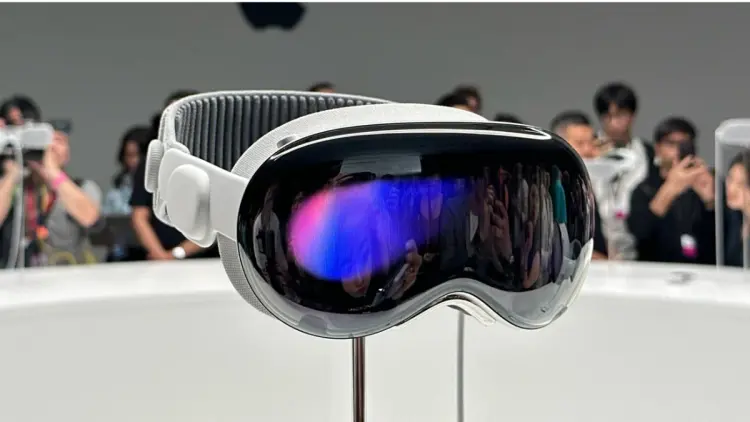
For its biggest visual hardware reveal, Meta unveiled Meta VR Glasses, a device weighing about 100 grams. Meta says that makes the glasses five times lighter than Quest 3. The lighter design is possible partly because the computing hardware and the battery sit in a separate unit connected to the glasses.
Zuckerberg framed the device around three uses: cinema, computer, and console. Meta showed immersive films and live sports, virtual screens for work, and gaming that can include Xbox Cloud Gaming. A partnership with ESPN is intended to offer sports viewing that feels closer to a front-row seat. Filmmaker James Cameron appeared in the presentation to discuss the quality of the viewing experience and its potential for storytelling.
Muse is integrated into the VR glasses’ operating system, allowing users to combine voice, eye movement, and hand gestures when navigating the experience. Chief technology officer Andrew Bosworth demonstrated those interactions live, along with hologram calling that shows a digital version of the full person rather than only the upper half familiar from standard video calls.
The glasses are planned for spring 2027, with a US price of $1,299.99. Their entertainment, work and calling features made for an ambitious demonstration; how comfortably and reliably they perform will become clearer when people can use the finished product.
Muse Charm Gives the Agent a Handheld Form
Zuckerberg ended the hardware presentation with a preview of Muse Charm, a small handheld device for using the agent when glasses are not practical. He showed a device with a screen and fingerprint recognition, with a playful appearance reminiscent of a digital pet. The keynote pointed to a December 2026 shipping target, though Meta has not yet provided full purchasing details.
Charm reinforced the keynote’s central idea: Meta wants Muse to be available through whichever device fits the moment. Zuckerberg closed by describing the path to a better future as putting “superpowers in everyone’s hands.” Connect offered Meta’s most detailed picture yet of how it hopes to do that, from an agent working across apps to AI built into glasses people can wear and a device they can carry.

.webp&w=750&q=75 "Meta Launches Enterprise AI Unit and Taps MongoDB CEO to Head it")
.webp&w=750&q=75 "GISEC 2026: AI Agent Security Puts Identity and Human Control in Focus")
.webp&w=750&q=75 "Nvidia Releases An AI Safety Software that Restricts and Monitors Agentic Activity")