
In Focus
- President Donald Trump urged Congress to pass the Clarity Act following a White House meeting with cryptocurrency executives
- Bitcoin rose sharply, moving above $70,000, while Ether and several crypto-related stocks also gained
- The Clarity Act would establish whether digital assets are securities or commodities and clarify SEC and CFTC jurisdiction
- The legislation remains stalled in the Senate amid disagreements over ethics provisions involving government officials and crypto businesses
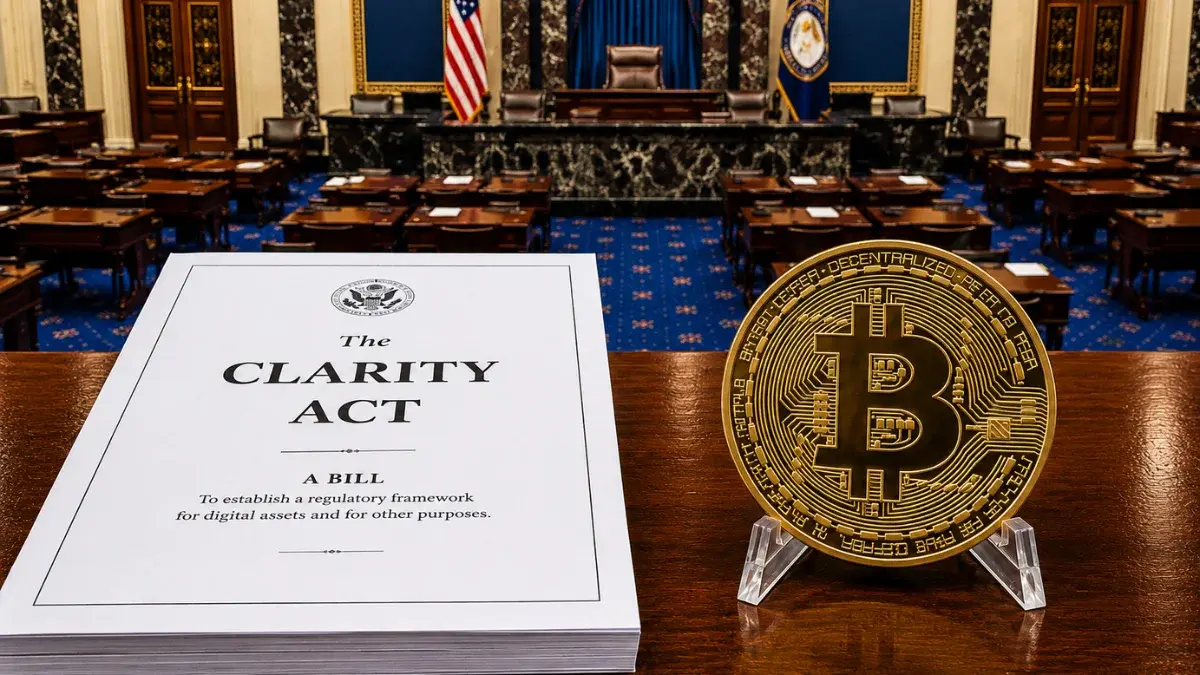
President Donald Trump urged Congress to pass the Clarity Act after meeting cryptocurrency executives at the White House, sending Bitcoin and crypto-related shares higher in U.S. trading on August 20. The legislation would establish clearer rules for the digital asset sector and define whether cryptocurrencies fall under securities or commodities regulation. Trump called for a “fair version” of the Clarity Act as the bill remains stalled in the Senate. The development puts the proposed framework back at the center of U.S. crypto policy discussions and has drawn attention from exchanges, miners and other digital asset businesses.
Clarity Act Faces Senate And Ethics Disputes
The Clarity Act would help clarify regulatory jurisdiction between the Securities and Exchange Commission and the Commodity Futures Trading Commission. Supporters argue that legislation could provide greater stability because agency-level rules may be vulnerable to changes under future administrations or challenges in court. The bill cleared the Senate Banking Committee in May and passed the House in July 2025, but it has since stalled in the Senate. Quartz reported that lawmakers are expected to revisit the measure around September 14, ahead of a critical September 15 procedural vote.
The Senate impasse includes disagreements over provisions concerning government officials operating or benefiting from crypto businesses. Many Democrats and some Republicans have sought stronger restrictions on political officials, including Trump, profiting from their own crypto ventures. Reuters reported that Trump disclosed more than $1.4 billion in earnings from his family's crypto ventures in 2025. The dispute adds a political and ethics dimension to the Clarity Act, potentially complicating efforts to secure enough support for the legislation before lawmakers leave Washington for the October election recess.
Bitcoin And Crypto Shares React To Policy Push
Financial markets responded quickly to Trump's renewed support for the legislation. Reuters reported that Bitcoin gained 3.4%, moving above $70,000 to a high of about $71,700, while Ether rose 3.3% to its highest level in more than three months. Coinbase gained 8.4%, Strategy rose 10%, and miners including Riot Platforms, MARA Holdings, Hut 8 and Bit Digital advanced between 3% and 6%. Canaan gained 20%, Circle rose 8%, and Robinhood increased 5%. The gains came despite Bitcoin remaining down about 18% for 2026.
Quartz reported a stronger immediate market reaction following the White House meeting, with Bitcoin climbing roughly 5% to about $71,880 and Ether gaining more than 9% to $2,288.91. Coinbase stock rose close to 8% in premarket trading, while Strategy gained 9.4% and MARA Holdings advanced 5.5%. Trump also said the CFTC was working to bring decentralized exchange Hyperliquid into the U.S. under a compliant legal framework. Separately, the U.S. Treasury's planned increase in long-term bond buybacks contributed to lower yields and stronger demand for higher-risk assets.
Industry Impact
The Clarity Act could have significant implications for cryptocurrency exchanges, trading platforms, miners, token issuers and financial institutions operating in the U.S. A statutory framework would provide clearer boundaries between SEC and CFTC oversight than the current agency-led approach. For businesses, the Senate's September timeline remains important because congressional action could determine whether digital asset companies receive a more durable regulatory framework or continue operating under rules that can change with regulatory and political priorities.



.webp&w=750&q=75 "DriveWealth Data Breach Exposes Revolut’s Irish Customer Data")
.webp&w=750&q=75 "Meta Connect 2026 Announcements: Muse Takes Center Stage")